
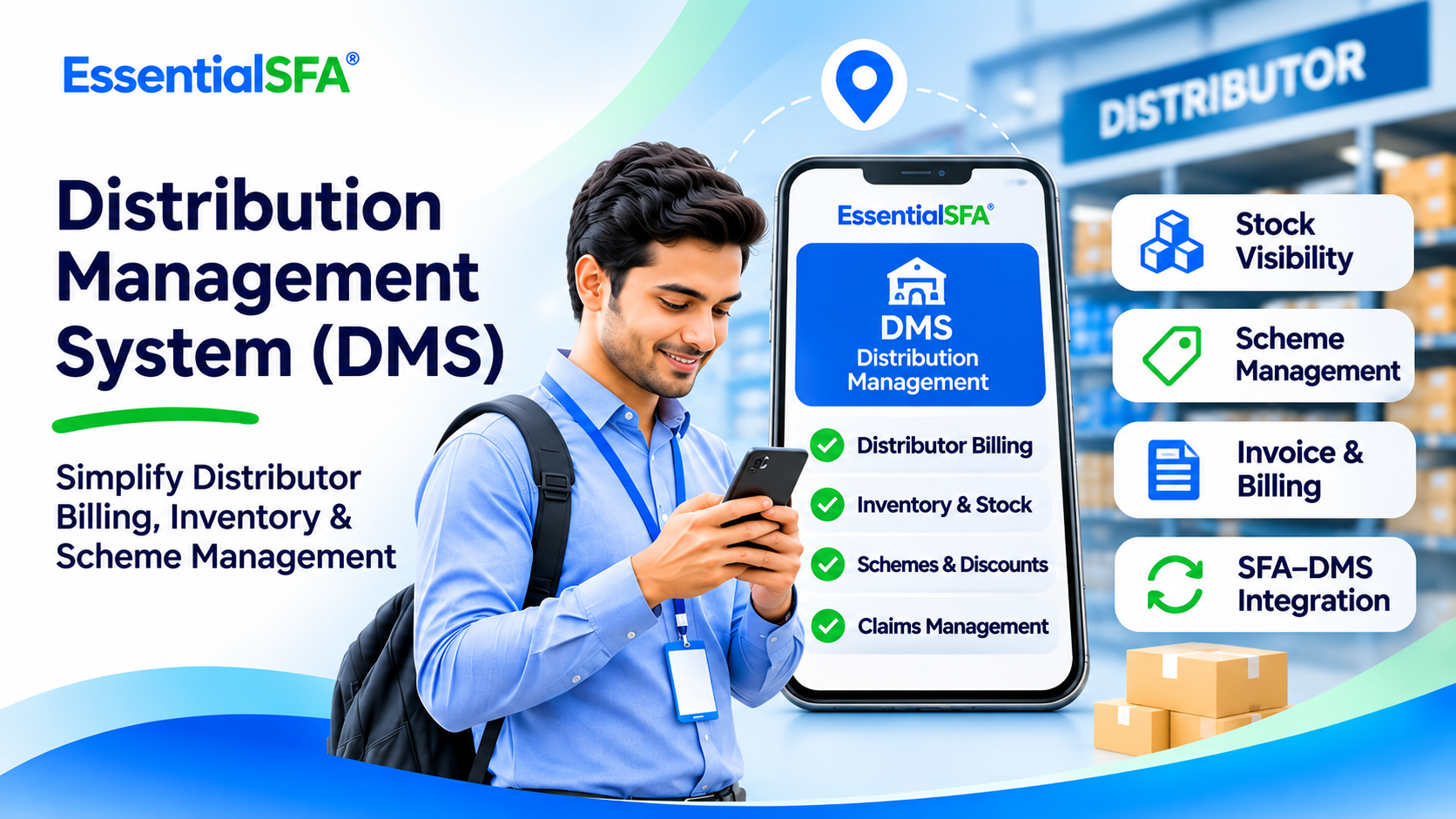
What A Distribution Management System Actually Does
A Distribution Management System (DMS) sits between your ERP and the distributor’s ground reality. It pulls clean, structured data from distributor billing and pushes back policies and schemes, so both sides see the same picture.
Think of it as the source of truth for orders, invoices, claims, and stock at the distributor warehouse level. Without that layer, every decision you make on primary vs secondary sales is half blind.
Core Functions Of A Modern DMS
Most Indian brands start by wanting basic distributor billing automation and quickly realise they need more. A good distributor management platform india typically covers these areas:
Distributor Billing: Captures invoices, credit notes, and returns in a standard structure you can analyse. Inventory Tracking: Tracks stock by batch, expiry, and location to cut both stockouts and overstocking. Schemes And Discounts: Applies scheme logic correctly so you can audit leakages instead of guessing. Claims Management: Routes trade and damage claims for approval with full document trails. Data Sync To ERP: Keeps master data, prices, and policies in sync rather than living in email threads.
Why Distribution Management System Software India Is Different From SFA
This is where many teams slip. They expect SFA to fix distribution issues and then blame the tool when nothing improves. SFA and DMS solve related but different problems.
SFA (Sales Force Automation) focuses on what your field reps do: outlet visits, order capture, merchandising, van sales. DMS focuses on what your distributors do: billing, stock, schemes, and claims. They should talk to each other, not compete.
DMS Vs SFA Software In Plain Language
If you are comparing DMS vs SFA software, use this simple lens: SFA answers “What is the market asking for?” while DMS answers “What did we actually bill and deliver?” You need both to trust your secondary sales number.
Use SFA When: You want better outlet coverage, order capture, and on-the-ground execution discipline. Use DMS When: You want accurate, timely distributor data, scheme control, and inventory visibility. Use Both Together: You want a clean link between field orders and distributor billing so finance and sales stop arguing.
This hand‑off is exactly where platforms such as EssentialSFA focus, giving brands one flow from order to invoice instead of three disconnected systems.
Why FMCG And Pharma Need A Dedicated Distributor Management Platform
In Indian FMCG and pharma, your distributors are not optional partners. They are your route to market. Treating them as a black box is the quickest way to lose market share to a nimbler rival.
A specialised distribution software for FMCG pharma brand does three things better than generic tools: handles schemes, handles batch/expiry, and respects local compliance (especially for pharma schedules and returns).
Common Distribution Pain Points In India
If you recognise three or more issues from this list, your DMS is either missing or underused:
- 1. Unreliable Secondary Sales: Secondary numbers arrive weeks late, making planning a guessing game.
- 2. Scheme Leakage: Trade schemes are applied inconsistently, and you cannot tie payout to real uplift.
- 3. Expiry And Breakage Claims: Claims sit in email, and no one can see ageing or patterns by distributor.
- 4. Stockouts At Key Outlets: Primary stock looks healthy, but critical SKUs go missing in-market.
- 5. Distributor Resistance: Distributors complain your systems are too complex or slow and go back to Tally-only.
A focused DMS rollout, rather than another SFA refresh, is usually what calms this chaos for Indian brands that sell through layered distribution.
How DMS And SFA Should Work Together In One Stack
The right question is not “DMS or SFA?” but “How do we make DMS and SFA speak the same language?” That means a shared master for products, customers, pricing, and schemes, plus a clean flow of orders and invoices.
In practice, your SFA should capture the retailer order and route it to the mapped distributor. The DMS should convert that into a bill, apply schemes, and send back fulfilment status.
Practical Data Flows Between DMS And SFA
To avoid finger‑pointing between sales and finance, design these data flows clearly from day one:
Order To Invoice: Every SFA order either becomes a DMS invoice or a clear cancellation with reason. Price And Scheme Sync: Any change approved in HO reflects in both DMS and SFA the same day. Outlet Mapping: Each outlet sits under exactly one active distributor, with history retained on remapping. Stock Visibility: Distributor stock feeds SFA so reps can push what is actually available.
When this plumbing is set up early, you avoid a lot of rework during scale‑up and can use your field team data to drive real replenishment decisions.
Evaluating Distribution Management System Software India Vendors
Once you are clear that you truly need DMS, the next battle is picking the right stack for Indian conditions. Nice dashboards are the easy part. Getting dozens or hundreds of distributors to actually use the system every day is the hard part.
Before you sign, run each option through a short but hard checklist that reflects both HO needs and distributor realities.
Key Criteria For Indian FMCG And Pharma Brands
Use this as a practical scorecard when you compare vendors offering a distributor management platform india:
Distributor-Friendliness: Works on typical distributor hardware and internet, with simple, local‑language flows. ERP Integration: Connects cleanly with your existing ERP stack without six months of custom code. Pharma-Specific Needs: Handles batch, expiry, and schedule reporting in a way pharma auditors accept. SFA Compatibility: Offers pre‑built connectors or is part of an integrated suite with SFA. On-Ground Support: Has a playbook and field team for distributor onboarding and training.
Many Indian brands run pilots in two or three territories before rolling out nationally, which is exactly what experienced vendors like this DMS implementation guide usually recommend.
Phased Rollout Plan That Actually Works
A structured approach prevents your DMS from becoming “another HO project”. Keep the steps simple and time‑bound:
- 1. Diagnose: Map current distributor processes, Tally usage, and reporting gaps in 3–4 focus states.
- 2. Pilot: Roll out to a small distributor set with strong local relationships and measure adoption weekly.
- 3. Standardise: Lock master data, schemes, claim flows, and documentation based on lessons from pilot.
- 4. Scale:Expand region by region with a fixed playbook and internal champions in sales and finance.
Following this type of playbook is how platforms like EssentialSFA see brands move from messy pilots to stable, pan‑India coverage without burning out the sales team.
Conclusion
DMS is about making your distribution backbone visible, reliable, and predictable, while SFA makes your field execution sharper. For Indian brands, the real power comes when both run in sync on the right distribution management system software india stack.
If you are ready to move beyond spreadsheets and partial distributor data, this is the moment to map your gaps, shortlist tools like EssentialSFA that truly connect DMS and SFA, and commit to a phased rollout with clear KPIs.
Frequently Asked Questions
Q1. What Is The Difference Between DMS And SFA Software? Ans: DMS focuses on distributor billing, stock, schemes, and claims, while SFA focuses on field execution such as outlet visits and order capture. They answer different questions and work best when integrated, so every secondary sale links cleanly from order to invoice.
Q2. Do Smaller Brands In India Really Need A DMS? Ans: A smaller brand can survive on spreadsheets and Tally for some time, but complexity grows quickly once you add states, distributors, and schemes. A DMS becomes useful as soon as you struggle to trust secondary sales or scheme payout numbers.
Q3. How Does Distribution Management System Software India Help Distributors? Ans: A well-implemented DMS reduces manual work for distributors by simplifying billing, automating scheme application, and speeding up claim approvals. It also gives them clearer visibility on stock and credit, which makes conversations with the brand smoother and faster.
Q4. Can One Platform Handle Both DMS And SFA Needs? Ans: Some platforms cover both, either natively or through tight integration. The key is shared masters for customers, products, and pricing, and a clean order-to-invoice flow. What matters less is how the vendor labels it and more how well the flows match your reality.
Q5. How Long Does A Typical DMS Rollout Take? Ans: Timelines vary by brand size and distributor readiness, but many Indian companies see a solid pilot in two to three months and a phased national rollout across key regions over six to twelve months, provided they commit internal owners and a clear change plan.