
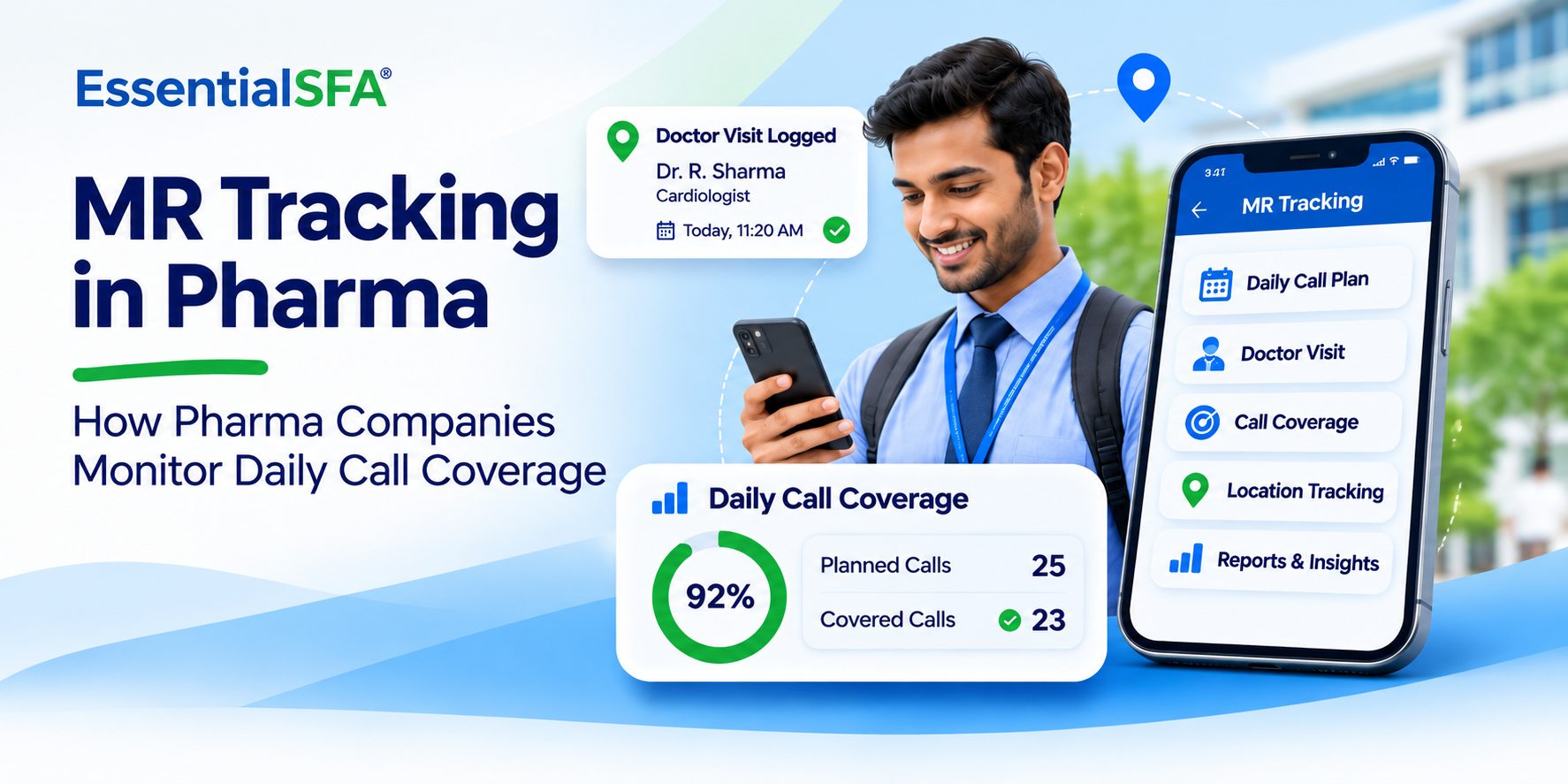
What Is MR Tracking In Pharma?
MR tracking is the process of capturing where medical representatives go, whom they meet, what they detail, and what outcomes they record, in near real time. The goal is simple: link field effort to prescription impact instead of treating calls as a black box.
Modern MR tracking covers five key dimensions – territory, doctor segmentation, frequency, call quality, and digital touchpoints. A good medical representative tracking app doesn’t only log coordinates; it captures samples given, discussion notes, competitor inputs, and follow-up actions.
Why Manual MR Tracking Fails Quickly
Most small and mid-size Indian pharma companies still start with shared spreadsheets and WhatsApp photos of call reports. It looks cheap in year one, then slowly kills visibility. Data is late, inconsistent, and almost impossible to summarise for a 200+ MR team.
Supervisors begin spending 30–40% of their time chasing gaps instead of coaching. HO struggles to answer basic questions like “which 200 doctors missed their cycle?” This is precisely the gap MR activity monitoring software is designed to close.
How MR Tracking Software Pharma Teams Actually Use Works
Field teams need tools that save time, not add extra admin. Good MR tracking systems automate most of the grunt work and guide reps through a clean, predictable workflow each day.
In many Indian setups, the most effective MR activity monitoring software follows a simple flow: plan, execute, record, and review – all inside a mobile app that works even with patchy network coverage.
Key Capabilities To Look ForWhen pharma leaders evaluate MR tracking platforms, they usually focus on three practical questions: Will my reps use it? Will my managers trust it? Can HO actually act on the data? The right feature set answers all three.
1. Smart call planning: Pre-loaded doctor lists, mapped to cycles and frequency, so reps don’t waste time on route planning. 2. Guided call reporting: Few, well-chosen fields that capture brand discussion, samples, and commitments in under two minutes. 3. Geo-validation: Location stamps and visit-time windows to discourage proxy reporting without harassing honest reps. 4. Sample and promo tracking: Clear trace of what goes out at call level, helping finance and compliance teams later. 5. Manager dashboards: Territory and team views that highlight gaps, not just totals.
Tools like EssentialSFA build this into one workflow so teams don’t juggle separate apps for routing, CRM, and daily call reporting.
Daily Call Coverage Tracking In Pharma
Daily call coverage is simply: of the doctors an MR was supposed to meet today, how many actually got covered by effective calls. HO often tracks monthly coverage, but the real control is in the daily pattern.
Daily call coverage tracking pharma managers rely on needs two ingredients – a clear call plan and reliable actual data. When those exist, you can move from excuses to coaching conversations very quickly.
How Companies Monitor Daily Coverage
Mature teams don’t wait for weekly reviews. They use live dashboards and short, structured huddles. Typical workflows in Indian companies now look like this:
1. Pre-day planning: MR confirms today’s call list inside the app, ideally aligned to HQ strategy and cycle planning. 2. During the day: Calls get closed in the app right after the visit, with location and notes captured together. 3. End-of-day closure: The system calculates achieved versus planned coverage, flagging missed priority doctors. 4. Next-morning review: Managers use a simple view of gaps to discuss reasons and corrective plans in their call with each MR.
Over a quarter or two, patterns become obvious – chronic under-coverage in pockets, doctors visited more than needed, and territories where cycle adherence is strong but outcomes lag.
Designing A Practical MR Activity Monitoring Framework
Software alone never fixes a weak field process. Companies that succeed with MR tracking start by defining a realistic activity framework and then using tech to enforce and refine it.
A good MR activity monitoring software stack supports four layers: coverage rules, call quality standards, data hygiene, and coaching routines. Skip any one, and your dashboards look colourful but don’t drive change.
Core Metrics That Actually Matter
Rather than tracking 30 vanity numbers, most effective Indian pharma organisations align around a tight set of metrics. These typically include:
1. Planned vs achieved calls: Not just totals but by segment (A/B/C doctors, specialists, hospitals). 2. Cyclic coverage: What percentage of target doctors were seen as per defined frequency in the cycle. 3. Average calls per day: Adjusted for travel intensity, rural/urban mix, and speciality focus. 4. Call quality indicators: Detailing time, brand focus, samples, and follow-up commitments recorded. 5. Repeat call impact: Simple trend views linking repeated quality calls to Rx lift, where data is available.
Once these metrics are stable, leaders can tighten or relax targets by cluster instead of pushing a single number across all territories.
Role Of Mobile Apps And Integration
A modern medical representative tracking app is usually mobile-first with a clean offline mode. This matters in India, where MR routes often move between metro hospitals and rural clinics in a single day.
The most successful pharma implementations pair the field app with tight HO integration – order systems, HR, brand analytics and, in some cases, prescription audit feeds. That’s how tracking turns into evidence-backed decision-making, not just more reporting.
What To Expect During Rollout
Rollout is where projects win or fail. Experienced teams plan for resistance, especially from senior reps used to paper reporting. A typical phased rollout for an MR tracking platform runs something like this:
Platforms like EssentialSFA usually support this with templates, starter dashboards, and configuration suited to Indian field structures so teams don’t start from a blank sheet.
Conclusion
MR tracking software pharma leaders choose today has one real purpose: turn scattered field activity into clear, daily visibility that managers and brands can act on. Coverage improves, coaching becomes specific, and data stops being a monthly surprise.
With a clear activity framework, realistic daily call coverage targets, and a focused MR tracking stack such as EssentialSFA, pharma companies can make MR tracking software pharma a real competitive advantage rather than a compliance headache. If you’re rethinking your field reporting, this is the right time to act.
Frequently Asked Questions:
Q1. What Is MR Tracking In Pharma?MR tracking in pharma means recording where medical representatives go, which doctors they meet, what brands they detail, and the outcomes of each call. This is usually done via a mobile app that captures visit, samples, notes, and location in one flow.
Q2. How Does MR Tracking Software Pharma Teams Use Improve Results? MR tracking tools improve results by giving managers daily visibility into planned versus actual calls, coverage gaps, and call quality. That allows faster coaching, better territory planning, and more focused brand messaging, which typically leads to stronger prescription support over time.
Q3. What Is Daily Call Coverage In Pharma Sales? Daily call coverage is the percentage of planned doctors an MR actually meets on a given day. It focuses on the right doctors from the target list, not just raw call counts, and helps sales leaders spot territory issues early instead of waiting for month-end.
Q4. Is GPS Location Mandatory For MR Activity Monitoring? GPS isn’t legally mandatory, but most companies now use it to validate visits and discourage proxy reporting. The key is to configure reasonable rules so honest reps aren’t penalised for minor route changes while still protecting the company from fraudulent calls.
Q5. How Long Does It Take To Implement An MR Tracking System? Implementation timelines vary with company size and data readiness, but many mid-size pharma organisations can pilot an MR tracking system in 4–6 weeks. Full rollout then happens region by region, typically over another one to three months with structured training.
Explore EssentialSFA:https://essentialsfa.com/